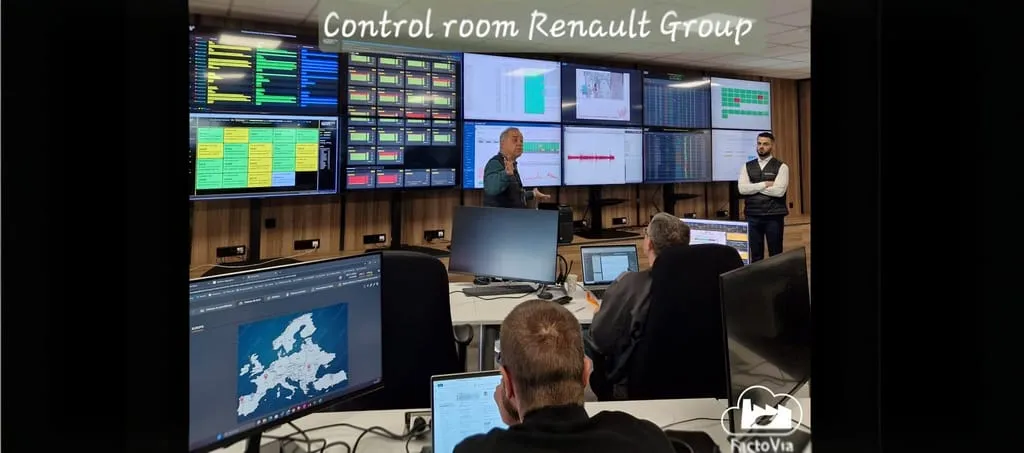
Walk onto any factory floor or into a power distribution center, and you will see screens showing pipes, tanks, conveyors, and electrical lines. Those displays are the front end of a system that has been quietly running industrial operations for decades. SCADA systems are the nervous system of many industrial facilities. They collect data from remote equipment, present it to operators, and log it for later analysis. But the role of SCADA is shifting as newer technologies like the Industrial Internet of Things (IIoT), edge computing, and Unified Namespace architectures emerge. Understanding how SCADA fits into this new landscape is critical for anyone responsible for industrial control systems.
I have spent years working with these systems in manufacturing and utilities. The first time I saw a well-tuned SCADA center, I realized how much trust operators place in those screens. A single alarm can halt a production line or prevent a dangerous pressure buildup. That trust is earned through reliability. But reliability alone is no longer enough. Modern industrial environments demand real-time data sharing across departments, plants, and even across continents. That is where the conversation about SCADA gets interesting.
The Core Job of SCADA
SCADA stands for supervisory control and data acquisition. It was built to do one job well: gather data from remote sensors and controllers, present it to a human operator, and allow that operator to send commands back. A typical SCADA system talks to programmable logic controllers (PLCs) and remote terminal units (RTUs) spread across a large area. It polls them on a cycle, typically every few seconds, and updates the human-machine interface (HMI) screens. The data also flows to a historian for long-term storage and reporting.
I have worked on sites where a single SCADA master station monitored hundreds of RTUs spread over fifty kilometers. The operators knew the latency for each device. They accepted that a reading might be a few seconds old. For water treatment and power distribution, that was fine. But in a modern factory running high-speed packaging lines, a few seconds of delay can mean thousands of dollars in waste. That is one reason why SCADA is evolving.
Where SCADA Meets Industry 4.0
Industry 4.0 pushes factories toward fully connected, data-driven operations. Digital twins, predictive maintenance, and real-time optimization all depend on streaming data from the shop floor to analytics platforms. Traditional SCADA systems were not designed for that. They were designed for human supervision, not machine-to-machine data sharing at high frequency.
That is where protocols like OPC UA and MQTT enter the picture. OPC UA provides a standardized way to expose data from controllers and sensors, with built-in security and information modeling. MQTT is a lightweight publish-subscribe protocol that works well over intermittent networks and is ideal for IoT and IIoT deployments. Many modern SCADA platforms now support these protocols natively. I have seen systems where Ignition by Inductive Automation acts as both a SCADA front end and an MQTT broker, feeding data to multiple consuming applications simultaneously. That kind of flexibility was rare a decade ago.
But here is the trade-off: adding IIoT-style connectivity to a SCADA system increases the attack surface. Cybersecurity becomes a bigger concern. Every new MQTT topic or OPC UA endpoint is a potential entry point. I have advised plants to segment their SCADA networks from corporate IT and to use firewalls, VPNs, and strict authentication. The convenience of open protocols must be balanced against the need to keep the industrial control system safe.
The Rise of the Unified Namespace
One of the most interesting developments I have seen is the move toward a Unified Namespace for industrial data. The idea is simple: instead of each application having its own data silo, all real-time data lives in a shared, addressable space. Any authorized consumer - a digital twin, a historian, an analytics engine - can subscribe to the data it needs without point-to-point integrations.
A Unified Namespace works well with MQTT because MQTT's topic structure naturally forms a hierarchy. For example, a temperature sensor in reactor 3 on line 2 might be addressed as factory/line2/reactor3/temperature. Any application that understands that namespace can consume the data. This approach reduces integration costs and makes it easier to add new devices or analytics without rewriting connectors.
SCADA systems can participate in a Unified Namespace as both producers and consumers. They can publish the data they collect and also subscribe to commands or setpoints from higher-level systems. I have seen projects where a legacy SCADA historian feeds data into a Unified Namespace via an MQTT gateway, allowing a digital twin to run in near real-time without modifying the original SCADA installation. That kind of coexistence is practical and cost-effective.
However, adopting a Unified Namespace requires careful planning. You need to define the topic hierarchy, handle data quality and timestamps, and manage access control. It is not a plug-and-play solution. But for companies that succeed, the payoff is significant: faster time-to-insight, reduced engineering effort for integrations, and a clearer path toward autonomous operations.

SCADA in the Era of Edge Computing
Edge computing is another force reshaping SCADA. In many modern architectures, data processing happens closer to the sensors rather than in a central server room. An edge device can run analytics, filter data, and send only meaningful events to the SCADA master or the cloud. This reduces bandwidth requirements and latency.
I have deployed edge nodes that run a local MQTT broker and a small historian. If the connection to the central SCADA is lost, the edge node continues logging data and buffering alarms. When connectivity returns, it replays the data. This approach improves resilience, especially in remote sites or on mobile equipment. The central SCADA still provides the operator interface and long-term storage, but the edge handles the real-time control loops.
Vendors like Siemens and Rockwell Automation already offer edge devices that integrate with their SCADA software. Wonderware (now part of Aveva) has similar capabilities. The line between SCADA and edge computing is blurring. That is a good thing for reliability, but it means that system architects need to think about data consistency and time synchronization across multiple nodes.
Practical Advice for Modernizing SCADA
If you are responsible for a SCADA system today, here are a few things I have learned that might help:
- Start with the data flow. Map where data originates, where it needs to go, and how quickly it must arrive. Do not assume your SCADA supplier's defaults are right for your use case.
- Consider a hybrid architecture. Keep the existing SCADA for operator interfaces and alarm management. Add an MQTT or OPC UA layer for machine-to-machine data sharing. This avoids a rip-and-replace project.
- Invest in cybersecurity. Segment the SCADA network, use encrypted protocols, and enforce role-based access. A single compromised HMI can bring down a plant.
- Plan for the Unified Namespace. Even if you do not implement it immediately, design your data tagging and addressing so that a future migration is straightforward. Use descriptive topic names and consistent units.
- Test with real data. Before rolling out changes, simulate your data flows with tools like Ignition or a simple MQTT client. Verify that latencies are acceptable and that alarms trigger correctly.
The Future of SCADA
SCADA is not going away. It will continue to be the primary interface for human operators in critical infrastructure and manufacturing. But its role is changing. It is becoming a node in a larger data ecosystem rather than the sole repository of operational data. The protocols it uses are shifting from proprietary to open standards like OPC UA and MQTT. The hardware it runs on is moving from dedicated servers to virtualized environments and edge devices.

I expect to see more integration between SCADA and enterprise systems, driven by the need for real-time data in business decisions. A plant manager should be able to see production rates and quality metrics on the same dashboard as inventory levels and customer orders. That requires a Unified Namespace that spans both operational technology and information technology.
The companies that invest in modernizing their SCADA infrastructure today will be better positioned to adopt advanced analytics, digital twins, and autonomous control in the future. Those that stick with isolated, proprietary systems will struggle to keep up. The choice is not between SCADA and something else. It is between a SCADA that connects and one that does not.